
This article is also available in Spanish.
Nearly four years ago, Bitcoin experienced a dramatic 17% drop from $19,500 to $16,200 in 2020, which became infamously known as the “Thanksgiving Day Massacre.” As the holidays approach, market participants wonder whether history could repeat itself.
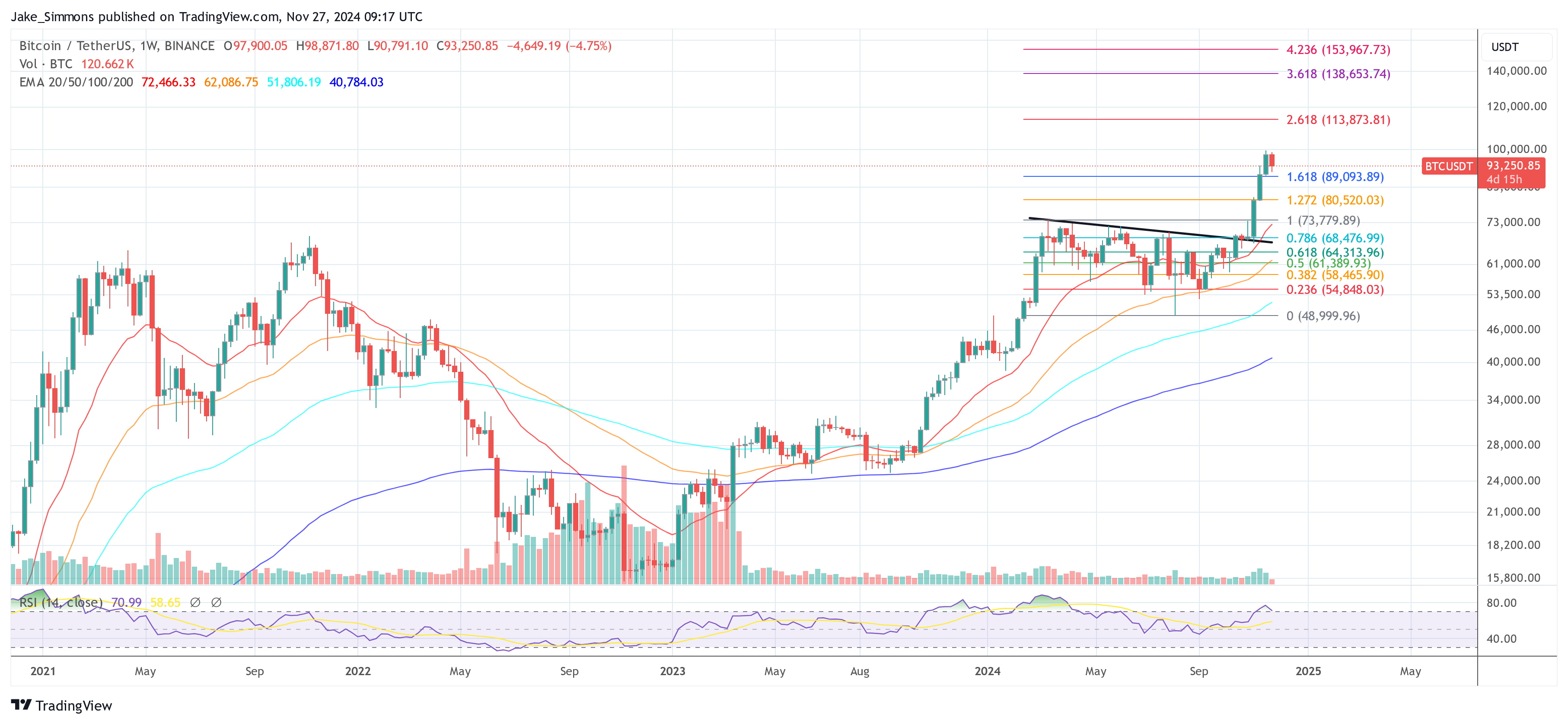
On Monday and Tuesday, Bitcoin’s price corrected 8%, falling from $98,871 to a low of $90,791. This sudden downturn has sparked discussions among analysts as to whether history could repeat itself for the price of BTC.
Bitcoin ‘Thanksgiving Massacre’ 2024?
Alex Thorn, director of research at Galaxy Digital, took to X to draw parallels between the current market and the events of 2020. “Who remembers the Thanksgiving dump in 2020? Bitcoin fell 17% between Wednesday, November 25, and Friday, November 27, 2020. BTCUSD subsequently more than tripled in value over the next 5 months. Does the story rhyme?”
A potential catalyst for a crash may be the global M2 money supply. There is currently a chart circulating on X illustrating the correlation between Bitcoin and global M2.
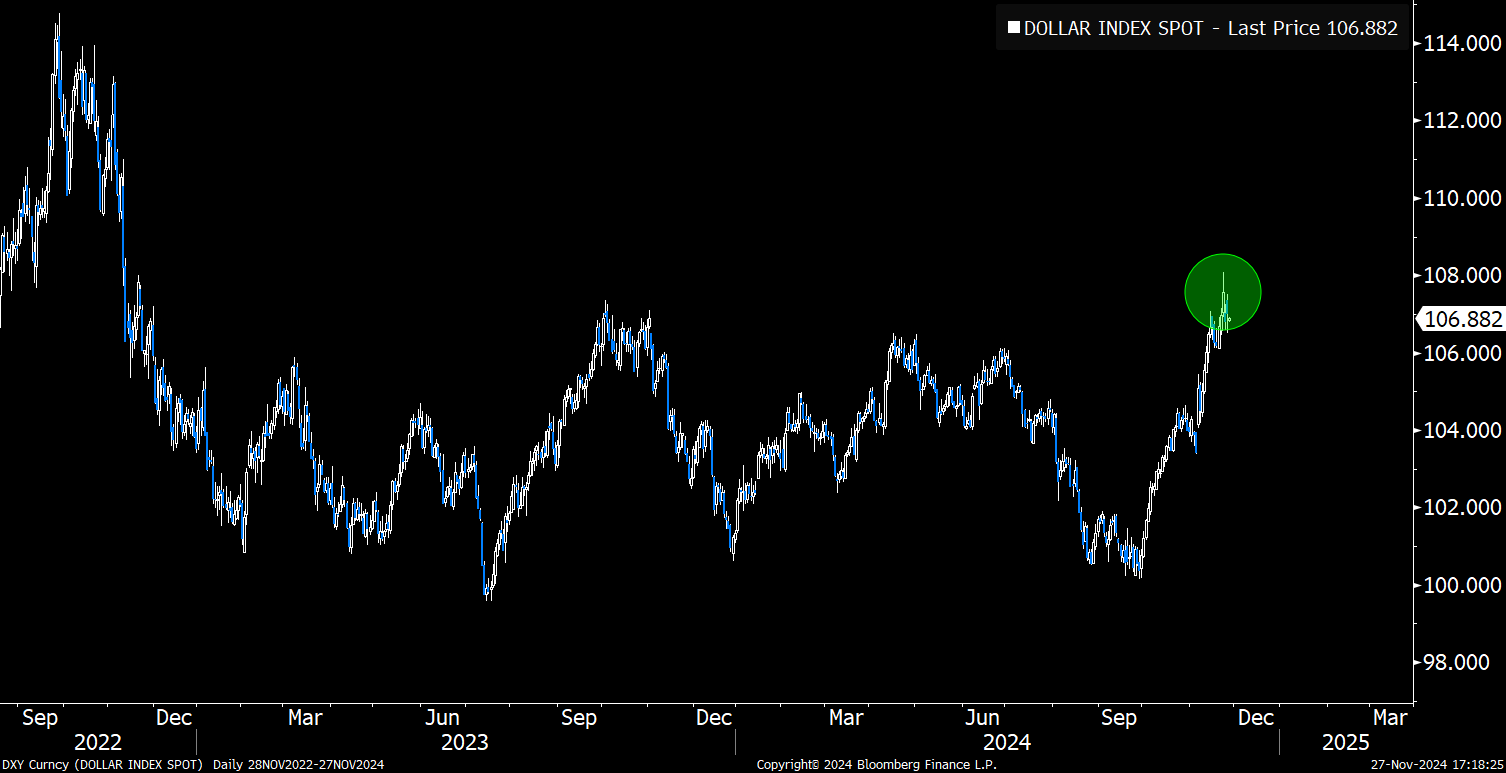
Joe Consorti, analyst at Theya, noticed that as of September 2023, “Bitcoin is closely tracking global M2 with a ~70-day lag.” Over the past two months, global M2 has fallen from $108.3 trillion to $104.7 trillion, with factors including a strengthening U.S. dollar – devaluing foreign currency M2 when converted to dollars – and an economic slowdown limiting action credit and deposits.
Consorti warns: “If the rate continues to follow the current M2 decline, a 20-25% correction could occur, potentially dragging Bitcoin down to around $73,000 – this is not a price prediction, but a clear reminder of Bitcoin’s link to the global money supply. ” However, he also acknowledged that Bitcoin could buck this trend as it has in the past, particularly “in 2022-2023 due to the FTX collapse and the resulting interest in the space evaporating.”
He suggests that structural ETF inflows and corporate buying pressure could facilitate Bitcoin counter the current M2 deflation. Consorti concludes: “Either way, a correction seems appropriate at this stage. As mentioned earlier, these rapid Bitcoin price increases always have stops along the way, […] it is critical to understand the assets you hold, the macro environment in which they exist, and the forces that drive their growth over the long term. If you really understand bitcoin, don’t panic when selling.”
Despite the cautious outlook, some analysts believe the decline may be short-lived. Jamie Coutts, Chief Cryptocurrency Analyst at Real Vision, emphasizes via X that “Bitcoin’s offering has eclipsed liquidity tightening over the past month.” While acknowledging that Bitcoin appears “overstretched compared to global M2” and that its liquidity model suggested caution, particularly with leverage, Coutts highlights potential policy changes that could favor risky assets.
He refers to the observations of economist Andreas Steno, who points out that the Federal Reserve “is in fact discussing the option of introducing USD liquidity – changes intended to support the development of liquidity as early as December.” Coutts concludes: “DXY could have won here. The lag effect from Fintwit’s focus on ATMs is still real, but ultimately the Fed is once again waving the bull flag towards risky assets. Bullish 2025. Bullish BTC.”
At the time of publication, the BTC price was $93,250.
Featured image created with DALL.E, chart from TradingView.com
