
Key takeaways:
- US government rescue plans and foreign exchange lines with the UAE are easing global liquidity concerns and lowering the risk of a credit crisis.
- Record Bitcoin ETF inflows and rising profits for BTC miners suggest mighty momentum despite the ongoing war in Iran.
Total cryptocurrency market capitalization rose to an 11-week high on Wednesday as Bitcoin (BTC) rose to $79,000 and Ether (ETH) reached $2,400. The uptrend came as investors became more confident that the immediate risk of a recession in the U.S. was waning, despite continued high oil prices resulting from the war in Iran.
Traders are now wondering whether Bitcoin and Ether are destined for further gains or if a short-term correction is imminent given the continued risk of an economic recession.
Nasdaq 100 futures (left) vs. Total cryptocurrency market capitalization, USD (right). Source: TradingView
The technology-heavy Nasdaq-100 index hit a record high on Wednesday as investors awaited quarterly earnings from Tesla (TSLA US). Brent crude oil prices rose 9% in two days after reports indicated Iran targeted two ships in the Strait of Hormuz. Increased energy costs make economic stimulus more likely by providing a ephemeral buffer for risky assets.
US liquidity plans and Bitcoin ETF inflows could offset recession fears
According to reports from US President Donald Trump he stated during an interview with CNBC that “the federal government should help” Spirit Airlines, a budget carrier that has experienced bankruptcy twice since 2025. The Trump administration has previously provided capital to chipmaker Intel (INTC US), utility Southern Company (SO US) and defense contractor L3Harris (LHX US).
The U.S. government’s direct intervention in private companies and the U.S. Treasury signal that lines of credit to allies have eased liquidity concerns. US Treasury Secretary Scott Bessent excellent on Wednesday that both the United States and the United Arab Emirates would operate a currency swap facility aimed at “maintaining order in dollar funding markets.”
U.S. allies are under pressure to sell U.S. bonds to raise dollars for local defense, imports and provide liquidity amid falling oil revenues and disruptions in the Strait of Hormuz. Potential currency swaps alleviate dollar shortages by preventing U.S. Treasury yields from rising. The overall impact includes lower borrowing costs and a reduced risk of an immediate credit crunch.
Six consecutive days of inflows for US-listed companies Funds listed on the Bitcoin exchange (ETF) with a total value of $1.54 billion likely boosted sentiment. The successful launch of the Morgan Stanley Bitcoin Trust (MSBT US), which reached $145 million in total net assets in less than three weeks, has improved Bitcoin risk perceptions despite global socioeconomic uncertainty.
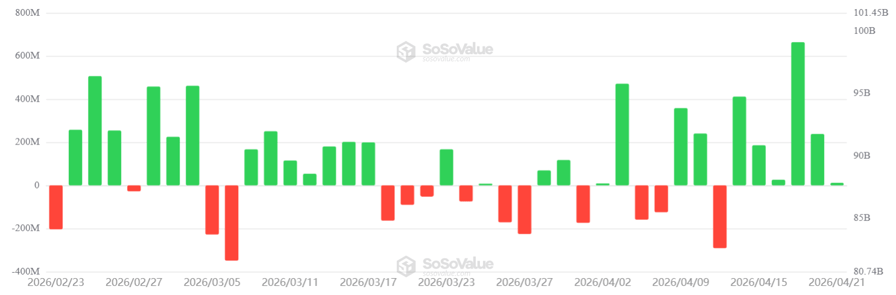
Daily net flows of ETFs listed on the US stock exchange, USD. Source: SoSoValue
Related: Bitcoin Inflows into Binance Falls to 2023 Low as BTC Bulls Set Target at 80K dollars
Bitcoin miner profitability eases short-term selling pressure
According to the Luxor-based Hashprice Index, as Bitcoin’s price approached $79,000, miners’ profitability reached its highest level since January.
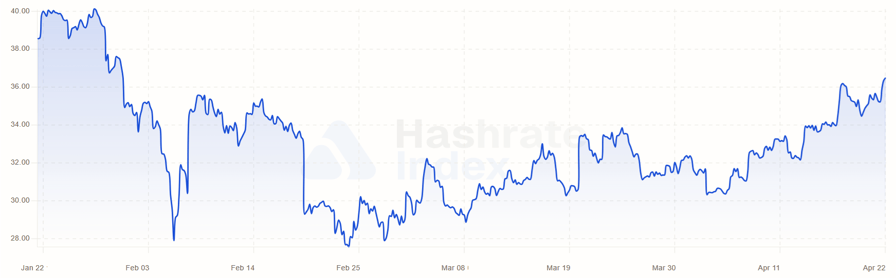
Bitcoin miner daily expected earnings per terahash, USD. Source: HashRateIndex
Miners have recently gained attention as a company sold significant amounts of Bitcoin to finance investments in data centers and AI infrastructure. Examples include MARA Holdings (MARA US), Riot Platforms (RIOT US), Core Scientific (CORZ US), and Cango (CANG US). While higher yields do not guarantee reduced selling pressure from miners, bullish momentum creates incentives to accumulate.
Ultimately, short-term correlation with US stock markets continues to dictate cryptocurrency trends; therefore, the Iran war and technological gains remain decisive for business sentiment.
With the U.S. government signaling that stimulus measures will be deployed to secure liquidity and address credit issues, Bitcoin and Ether appear poised to maintain their upward momentum.
